Mirrai Careers
Thank You Email After Interview: 4 Templates That Work (2026)
80% of hiring managers value thank-you emails. Only 24% of candidates send them. Free templates for every interview type.

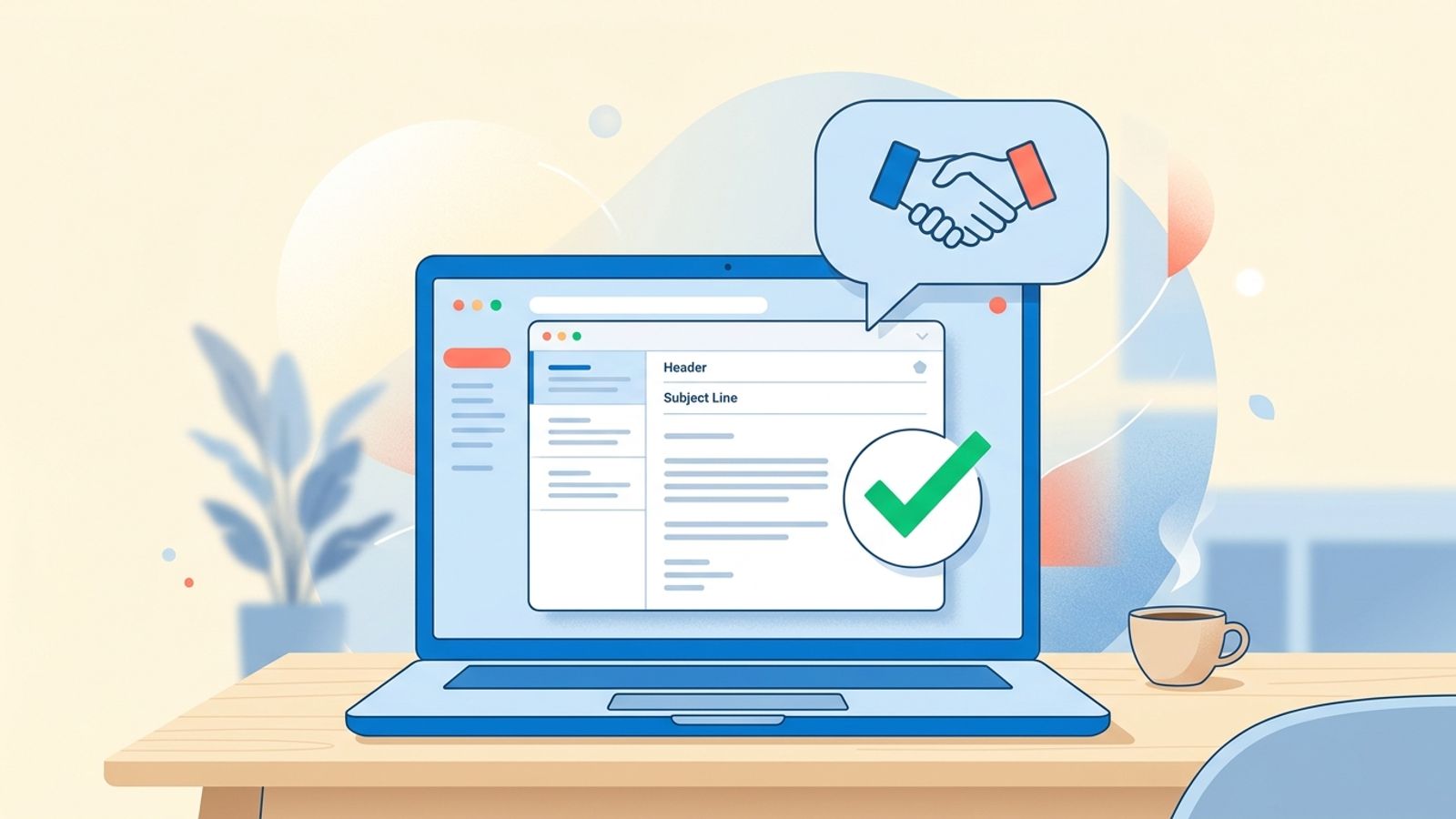
80% of hiring managers say thank-you notes help them evaluate candidates (Robert Half, 2017). 68% say not receiving one negatively affects their decision (CareerBuilder). And yet only 24% of candidates actually send them.
That's a free advantage sitting on the table. No skill required, no prep needed, just 5 minutes and an email. If you interviewed today, you should have something in the hiring manager's inbox before they go home tonight.
Below: four templates you can copy, paste, and customize in under 5 minutes. Plus when to send it, what to write, and how to follow up if you don't hear back.
Mirrai Careers
Match your resume to any job in seconds
Upload your resume, paste a job description, see your match score.
Try FreeFree month of Pro with code LAUNCH
Why Send a Thank You Email After an Interview
91% of hiring managers say they like receiving thank-you notes (AccountTemps/Robert Half, 2020). 22% said they're less likely to hire someone who doesn't send one. A 2023 Indeed survey found that 53% of hiring managers said thank-you notes directly influence their hiring decision.
The bar is low. Fewer than half of candidates bother. Sending one puts you in the minority that looks professional, attentive, and actually interested in the role. Not sending one leaves the hiring manager wondering if you care.
A thank-you email won't save a bad interview. But when it's you versus another candidate with similar qualifications, 53% of hiring managers say this is exactly the kind of thing that tips the scale. Five minutes of work for a measurable edge. Hard to argue against that math.
Thank You Email After Interview: Templates
Pick the one that matches your situation. Edit the bracketed sections. Send within 24 hours.
Template 1: Standard (After a Normal Interview)
Template
Subject: Thank you for the conversation - [Job Title] Hi [Interviewer Name], Thank you for taking the time to speak with me about the [Job Title] position today. I enjoyed learning about [specific thing discussed, e.g. a project, team goal, or company initiative]. Our conversation reinforced my interest in the role, especially [one specific aspect that connects to your experience]. I'm confident my background in [relevant skill/experience] would let me contribute quickly. Please don't hesitate to reach out if you need any additional information. Looking forward to the next steps. Best, [Your Name]
Template 2: After a Panel Interview
Template
Subject: Great meeting the team - [Job Title] Hi [Primary Contact Name], Thank you to you and the team for the time today. I appreciated hearing each person's perspective on [specific team challenge or project mentioned]. [Name from panel] mentioned [specific detail], and that stuck with me because [brief connection to your experience]. It gave me a clearer picture of how I could add value in this role. I'm very interested in moving forward. Let me know if there's anything else I can provide. Best, [Your Name]
For panel interviews, send the email to your main point of contact. If you have individual emails for each panelist and something genuinely specific to say to each, send separate short notes. Otherwise one email to the lead is fine.
Template 3: After a Phone Screen
Template
Subject: Thank you - [Job Title] phone screen Hi [Recruiter Name], Thanks for the call today about the [Job Title] role. It was helpful to learn more about [one thing you learned about the role or team]. Based on our conversation, I'm excited about the opportunity and believe my experience with [relevant skill] aligns well. Happy to provide any additional details or move to the next step whenever works. Best, [Your Name]
Phone screens are usually with recruiters, not hiring managers. Keep it shorter. The recruiter is processing dozens of candidates. Respect their time.
Template 4: After a Final Round
Template
Subject: Thank you for the final interview - [Job Title] Hi [Name], I wanted to thank you again for the in-depth conversation today. After meeting with [names or "the team"], I'm even more confident that this role is the right fit. What stood out most was [specific thing from the final round, e.g. a challenge they described, a value they emphasized, a project you'd own]. That's exactly the kind of work I want to be doing, and my [specific experience] has prepared me for it. I'm very excited about the possibility of joining [Company]. Please let me know if there's anything else you'd like from my side. Best, [Your Name]
Final round emails can be slightly longer and more specific. You're past the screening stage. They know you. Show them you paid attention.
Interview Follow Up Email: When and How
The thank-you email goes out within 24 hours. That's the baseline. But what if you don't hear back?
| Timeframe | Action |
|---|---|
| Within 24 hours of interview | Send thank-you email (templates above) |
| After their stated timeline passes | Send a follow-up email (template below) |
| 1 week after follow-up with no response | One more short check-in, then move on mentally |
| 2+ weeks of silence | You probably didn't get it. Keep applying. |
Follow Up Email Template
Template
Subject: Following up - [Job Title] interview Hi [Name], I hope things are going well. I wanted to check in on the [Job Title] position we discussed on [date]. I remain very interested in the role and the team. I understand hiring timelines can shift, so no rush at all. If there's any additional information I can provide in the meantime, I'm happy to. Best, [Your Name]
"Just circling back!" reads as anxious. "I know you're busy but..." reads as apologetic. Neither helps you. State your interest in one sentence, offer to provide more info, and stop typing. If they want you, they know where to find you.
Thank You Note After Interview: Email vs Handwritten
62% of hiring managers prefer email (Robert Half, 2019). The reason is boring but important: speed. A handwritten card takes 3-5 days to arrive. The hiring decision might take 2. Your thoughtful stationery arrives after someone else already got the offer.
| Format | When to Use | Pros | Cons |
|---|---|---|---|
| Always (default) | Fast, reliable, easy to forward to other decision makers | Less personal | |
| Handwritten note | In addition to email, for senior roles or small companies | Memorable, shows extra effort | Arrives too late to influence fast decisions |
| LinkedIn message | Only if you don't have their email | Better than nothing | Informal, may get lost in notifications |
Default to email. If you want to also send a handwritten note for a role you care about, that's a nice touch on top. But the email does the actual work because it arrives while the decision is still open.
Before you leave
See how your resume stacks up
Paste any job description and get your match score in 30 seconds.
Try FreeFree month of Pro with code LAUNCH
FAQ
How soon should I send a thank you email after an interview?
What if I interviewed with multiple people?
Should I send a thank you email after a phone screen?
What if I don't have the interviewer's email address?
Can a thank you email actually change the hiring decision?
Keep track of every application, interview, and follow-up in one place. Mirrai's Application Tracker shows you which roles need a thank-you email and which are waiting for a follow-up.