Mirrai Careers
How to Apply for a Job in 2026: What Actually Gets You Hired
250 resumes per opening. 75% rejected by ATS. 75% of applicants never hear back. Here's how to be in the other 25%.

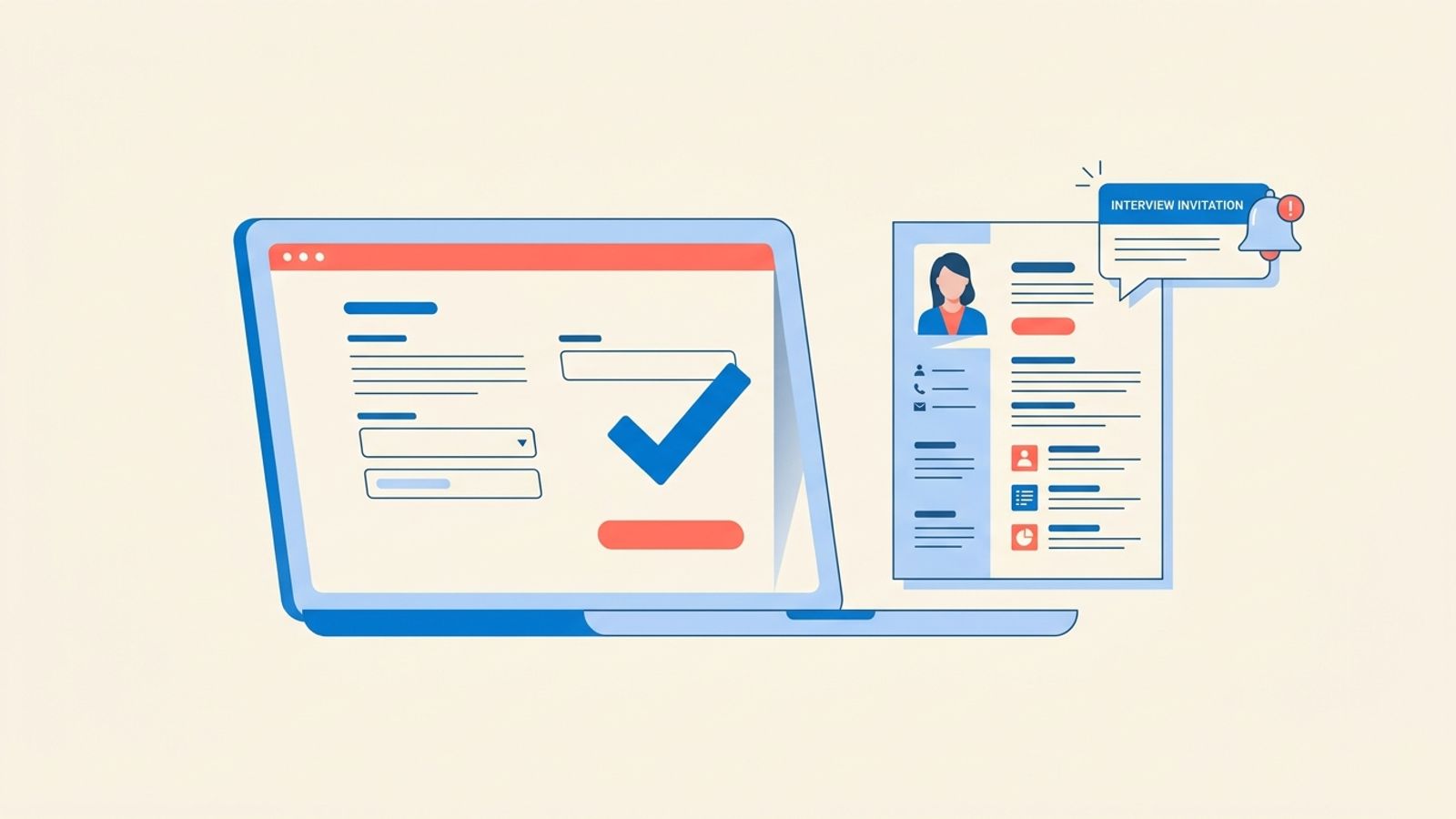
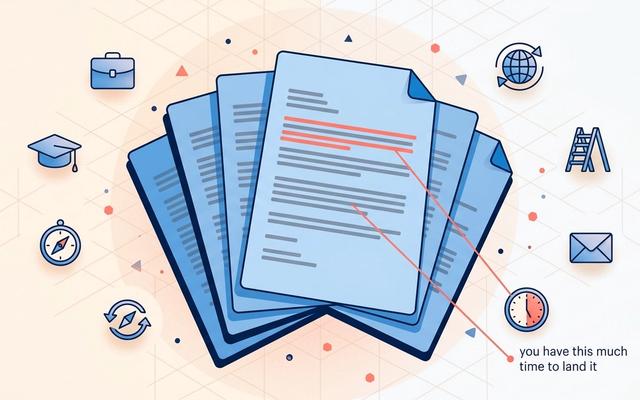
The average corporate job posting gets 250 applications (Glassdoor, 2023). 75% of those are rejected by ATS before a human reads them (Jobscan, 2024). Of the ones that make it through, recruiters spend 6-7 seconds on each (TheLadders, 2018). And 75% of applicants never hear back at all (Indeed Hiring Lab, 2024).
Those numbers are brutal. They're also the reason most job search advice is useless. "Apply to lots of jobs" doesn't work when the conversion rate is 2-3%. What works is applying differently: fewer applications, better targeting, and using channels that actually get seen.
Mirrai Careers
Match your resume to any job in seconds
Upload your resume, paste a job description, see your match score.
Try FreeFree month of Pro with code LAUNCH
How to Apply for a Job (Step by Step)
Most guides list 15 steps that boil down to "find a job and apply." Here are the six that actually change your callback rate.
1. Find Roles Where You Match 70%+ of the Requirements
Job descriptions are wish lists. Companies write them for the perfect candidate who doesn't exist. If you match 70% of the requirements, apply. SHRM data shows that most hires don't check every box on the posting.
Where to look: LinkedIn, Indeed, Glassdoor for volume. Company career pages directly for less competition. Niche job boards for your industry (AngelList for startups, Dice for tech, Idealist for nonprofits). And your network, which we'll get to.
Finding the 70%-match roles is the slow part, and it's where most people give up and start spraying. You can flip it. Instead of keyword-searching a dozen boards and eyeballing fit, let a search rank live openings by how well they match your resume. Mirrai's AI Job Search reads roles straight from company career pages, scores each against your experience, and shows which requirements you actually hit, so the strong matches float up and you stop scrolling past a hundred jobs that were never yours. It also buries the ghost and long-stale ones, so you're not tailoring for a posting nobody's filling.
2. Tailor Your Resume for Each Application
This is where most people lose. More than half of job seekers send the exact same resume to every job. That resume gets 6 seconds of attention if it makes it past the ATS at all.
The minimum: rewrite your summary to match the role, reorder your skills to mirror the job description, and adjust 3-5 bullet points with language from the JD. This takes 15-20 minutes and makes you 40% more likely to get a callback (TopResume, 2023).
We wrote a full walkthrough on this: how to tailor your resume to a job description.
3. Write a Cover Letter (When It's Required or When You Have a Story)
If the application asks for one, write one. If it says "optional," write one anyway for roles you actually want. Skip it for mass applications where you're testing the waters.
A cover letter should answer one question: why this specific job at this specific company? Three paragraphs. First: what role and why you're interested. Second: one achievement that proves you can do it. Third: what you'd bring and how to reach you. That's it.
Templates and examples in our cover letter guide.
4. Use Your Network Before You Use Job Boards
Referrals account for 30-50% of all hires while representing only 7% of applicants (Jobvite, 2024). A referred candidate is 4-5x more likely to be hired than someone who applied through a job board (SHRM/ERE, 2023). One in 16 referral candidates gets hired. One in 152 job board applicants does.
You don't need to know someone at the company personally. A second-degree LinkedIn connection is enough. Message them. Be specific: name the role, explain why you're a fit in two sentences, and ask if they'd be open to referring you or pointing you to the right person. Most people say yes. It costs them nothing and companies pay referral bonuses.
5. Apply Early
Candidates who apply within 48 hours of a job posting are 2-3x more likely to get an interview (Brazen/iCIMS, 2023). Monday and Tuesday mornings, 6-10 AM local time, see 13% higher response rates (Talent Works, 2023).
Set up job alerts. When a role that fits you goes live, apply that day. Waiting a week means competing with 200 more people who got there first.
6. Track Everything
After 10-15 applications, you'll start losing track of where you applied, when, and what version of your resume you sent. That leads to missed follow-ups and duplicate applications.
Use a tracker. A spreadsheet works. Mirrai's Application Tracker keeps everything in one place: status, resume version, follow-up dates.
How to Apply for a Job Online
Most online applications go through one of three channels. Each has a different success rate, and knowing the difference saves you hours.
| Channel | Interview Rate | Why |
|---|---|---|
| Company career page (direct) | 4-5% | Less competition. ATS still screens, but you bypass aggregator noise. |
| Job board (Indeed, LinkedIn) | 2-3% | High volume. Your resume competes with 100-250+ others. |
| LinkedIn Easy Apply | 1.5-2% | Lowest barrier = most competition. Everyone clicks the button. |
LinkedIn Easy Apply is the fast food of job applications. Low effort, low reward. If you're going to use it, limit it to roles where you're a strong match. For jobs you actually care about, go to the company's website and apply directly. The extra 5 minutes of filling out their portal puts you in a smaller pool.
When filling out online applications:
- Upload a PDF resume unless the system specifically asks for .docx. PDFs preserve formatting.
- Don't leave optional fields blank. "Additional information" is a chance to add keywords the ATS is looking for.
- Copy your resume content into the text fields even if you already uploaded the file. Some ATS systems only parse the text fields, not the uploaded document.
- Check that your parsed resume looks right. Many portals butcher your formatting when they auto-fill. Fix any errors before submitting.
Make sure your resume is ATS-compatible first. Our ATS resume guide covers formatting, keywords, and common mistakes.
Job Application Email: How to Write One That Gets Read
Sometimes the job posting says "send your resume to hiring@company.com." Sometimes you're reaching out cold to a hiring manager. Either way, the email is your first impression, and it needs to be short.
Hiring managers receive dozens of these. Austin Belcak's research at Cultivated Culture found that personalized cold emails to hiring managers get a 15-25% response rate, compared to 2-5% for portal submissions. But "personalized" is doing a lot of work in that sentence. A generic "I'm excited about this opportunity" email is not personalized.
Job Application Email Template
Subject line: Application for [Job Title] - [Your Name]
Body:
Email Template
Hi [Name], I'm applying for the [Job Title] role at [Company]. I saw the posting on [where you found it]. Quick context: I've spent [X years] in [relevant field] and most recently [one specific, relevant achievement with a number]. I'm interested in [Company] because [one genuine, specific reason — not "your amazing culture"]. I've attached my resume. Happy to share more details or hop on a call whenever works. Best, [Your Name] [LinkedIn URL] [Phone]
Keep it under 150 words. The recruiter isn't reading your life story. They're deciding whether to open your resume. That's the only job this email has.
What makes the difference:
- Use their name, not "Dear Hiring Manager" (LinkedIn search takes 30 seconds)
- One concrete achievement with a number, not a list of adjectives about yourself
- A specific reason you want THIS company, not a line that could apply to any company on earth
- No "I believe I would be a great fit." You believe that. So does everyone else who applied.
Job Application Tips That Actually Move the Needle
Everything above is the process. These are the details that separate people who get callbacks from people who wonder why they don't.
Follow up after 5-7 business days. 80% of applicants never follow up. A short email checking in on your application status puts you back on the recruiter's radar. Don't write a novel. "Hi [Name], I applied for [Role] on [date] and wanted to confirm my application was received. Still very interested. Happy to provide any additional information." Done.
Apply to fewer jobs, better. The math says you need about 21-24 applications to get one offer (Jobvite, 2024). But that's a median. People who tailor every application and use referrals can cut that number in half. People who blast 200 generic resumes may never get there. Ten targeted applications will beat fifty lazy ones.
Don't apply on Friday afternoons. Your resume goes into a pile that sits over the weekend while fresh Monday applications land on top. Hiring managers review in chronological order (most recent first) or by ATS score. Timing won't save a bad resume, but it can give a good one a slight edge.
Research the company for 10 minutes before applying. Not because anyone will quiz you. Because it changes how you write your summary, which keywords you use, and whether you mention the company's product in your cover letter. These details register, even in a 6-second scan.
Build your application materials in one place. Mirrai's Resume Builder lets you create tailored resume variants for each role and the Job Matcher shows you where you match before you hit submit.
Before you leave
See how your resume stacks up
Paste any job description and get your match score in 30 seconds.
Try FreeFree month of Pro with code LAUNCH
FAQ
How many jobs should I apply to per day?
Should I apply even if I don't meet all the requirements?
Is LinkedIn Easy Apply worth it?
How long should I wait before following up?
What do I do if I never hear back?
How do I find jobs I actually match before applying?
Stop sending the same resume to every job. Mirrai's Job Matcher analyzes the job description and shows you exactly where your resume fits. Fix the gaps, export, apply. Takes 2 minutes.